After our intense van-hunt, we finally hit the road with the perfect van, heading north. The North of New Zealand is a bit of an underdog: less hyped than the South, but warmer. It’s famous for its insanely blue waters and its holiday homes built by wealthy Kiwis.
We camped mostly on freecamps: completely free but offering the bare minimum. Think: a toilet (questionable), and if you’re lucky, potable water. Showers? Only on paid campgrounds, which can set you back €15 per person.
Waitangi
This town is where the Treaty of Waitangi was signed, the so-called founding document of New Zealand. Drafted by Mr. Busby, the first official British resident in Aotearoa, who probably had no idea he was laying the groundwork for centuries of confusion.
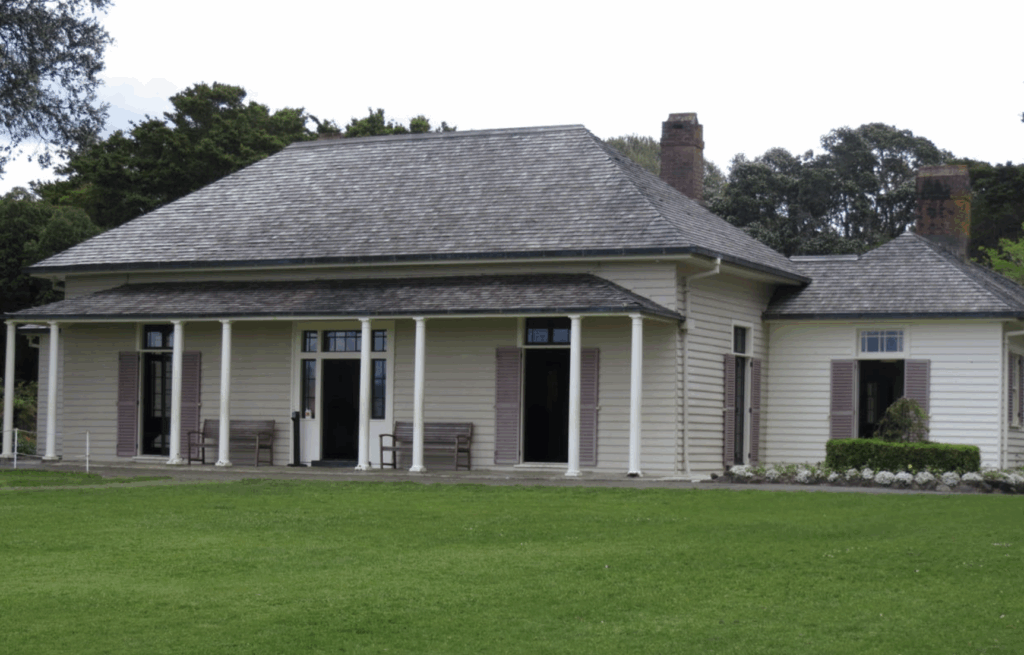
mr. Busby’s house still stands today
A Brief (but Brutal) History
The Māori arrived here around 1300 AD, just as Bruges and Ghent were peaking and this place was… empty. According to their mythology, the legendary chief Kupe was first to set sail from their ancestral homeland, Hawaiki.
Back then, New Zealand had no land mammals, except a couple of bat species. The “big game”? A kind of mega-ostrich (moa), weighing up to 240kg. They were quickly devoured by the Māori.
They spread fast: both islands colonised within a century. Populations and tensions flared. Fortified villages popped up, and a rich, distinct culture formed.
All was well until the Europeans showed up.
Enter: White People
The first European to spot New Zealand was Dutchman Abel Tasman in 1642. The Māori, following tradition, blew a seashell horn to greet the strange ship. According to their customs, if the stranger responds, he’s an enemy. Tasman, absolute muppet, cheerfully tooted back. The Māori attacked the ship. Four Dutchmen died. Abel pooped himself and turned around.
Fast forward 100+ years. In 1769, both the British and French returned (proper coloniser energy). This time, they went ashore. Surprisingly, things stayed calm. Māori needed Europeans for tools and guns. Europeans needed Māori for local knowledge and trade. Win-win… until muskets ruined the balance.
The Musket Mayhem (1818–1836)
Northern tribes got muskets first, instantly overpowering the southern tribes. Cue: a domino war. Each newly-armed tribe went on a conquest spree until, eventually, everyone had muskets. Balance (sort of) restored.
The Treaty of Waitangi (1840)
On Feb 6, 1840, 40 Māori chiefs signed the Treaty. In theory, it gave the British Crown sovereignty, but allowed Māori to govern their people and lands.
In practice? Disaster.
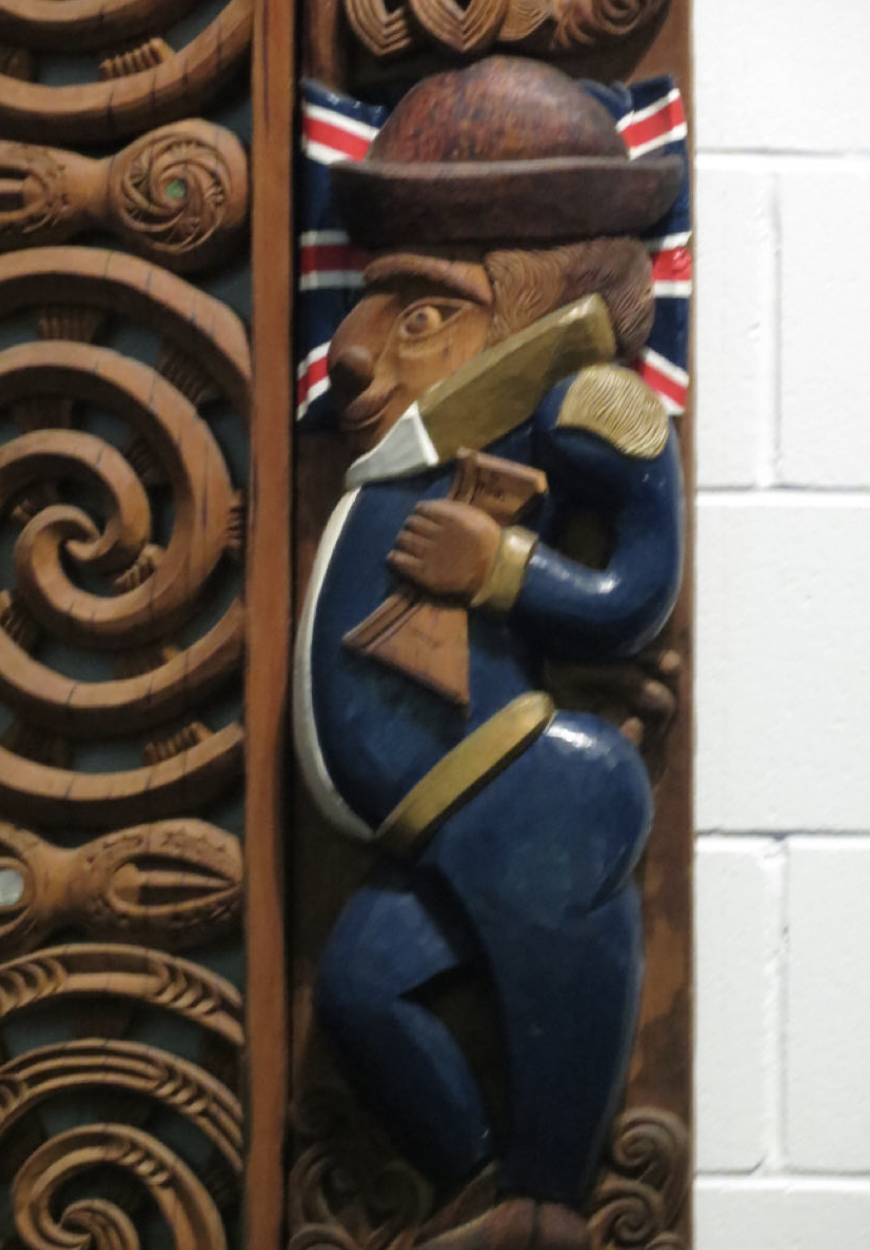
Translation issues caused chaos. “Sovereignty” and “governorship” were lost in the Māori version. Most had no clue what they were signing. And let’s not forget: Māori had no concept of individual land ownership. Land belonged to the tribe. The tribe belonged to the land. To the British, this screamed communism. So, they made it legally possible for one Māori to sell off tribal land. Goodbye land, hello exploitation.
In this picture you see a Māori carving of a representation of the treaty, where a British colonialist holds up the treaty, with his fingers crossed behind its back.
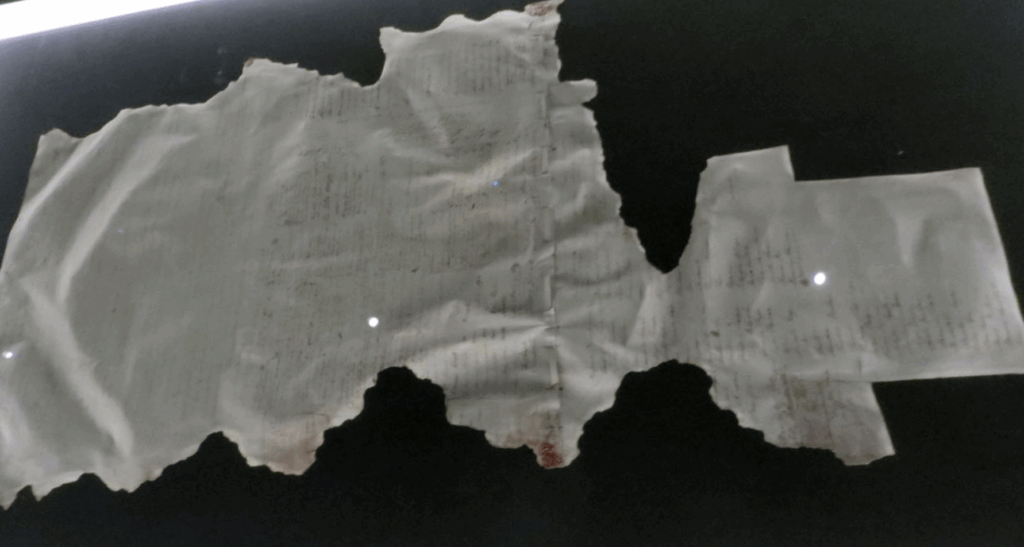
The treaty ended up being basically ignored. Māori lost most of their land and power for over a century.
Enter: Queen Lizzie (1953)
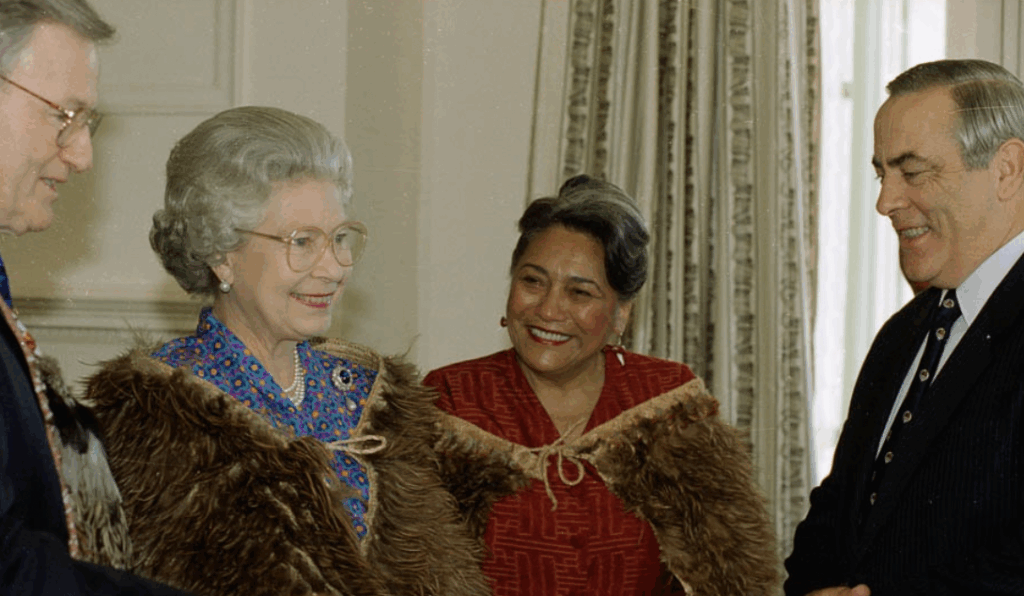
Fun fact: not a single British monarch had bothered visiting NZ until 1953. Queen Elizabeth came… for one hour. In that time, she signed the “Royal Titles Act,” officially calling herself “Queen of New Zealand” when on NZ soil. She also planted a tree. Then hopped back on her private jet.
Modern Day
Finally—finally: NZ is putting serious effort into Māori inclusion. Māori today make up ~15% of the population. Their language is now everywhere: on bus stops, shop signs, even in schools (some preschools are in Māori, high school in English). The country is officially bilingual. Still, there’s a gap in education and standard of living.
Back to the Treaty Grounds
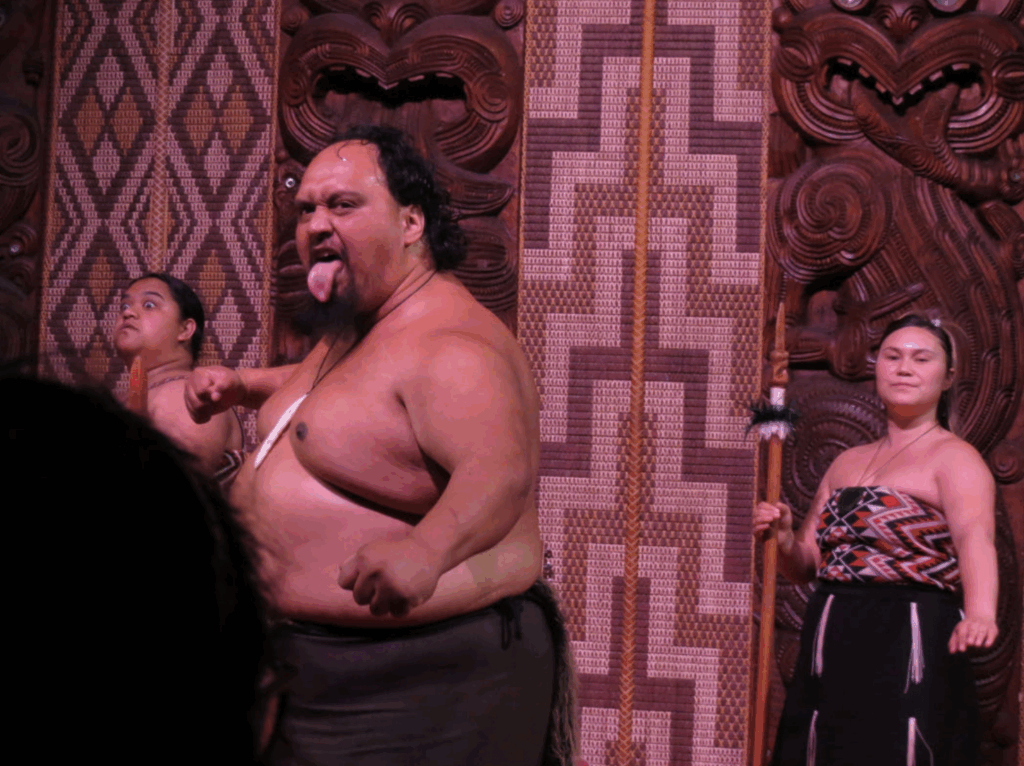
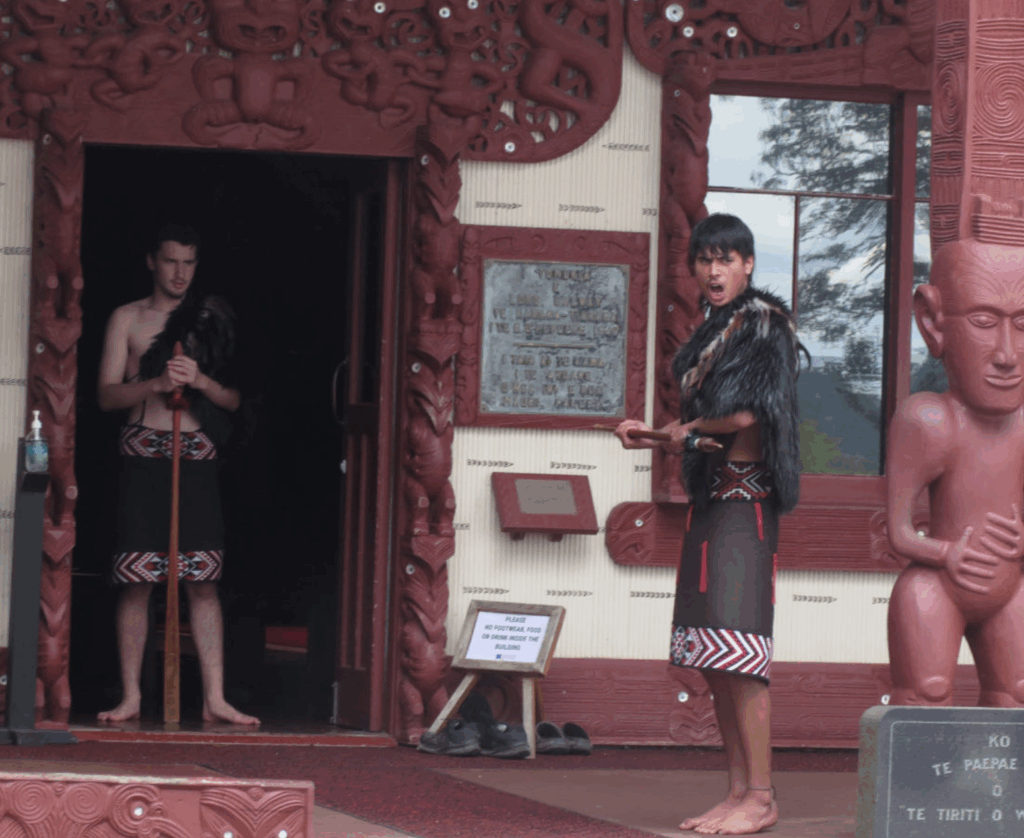
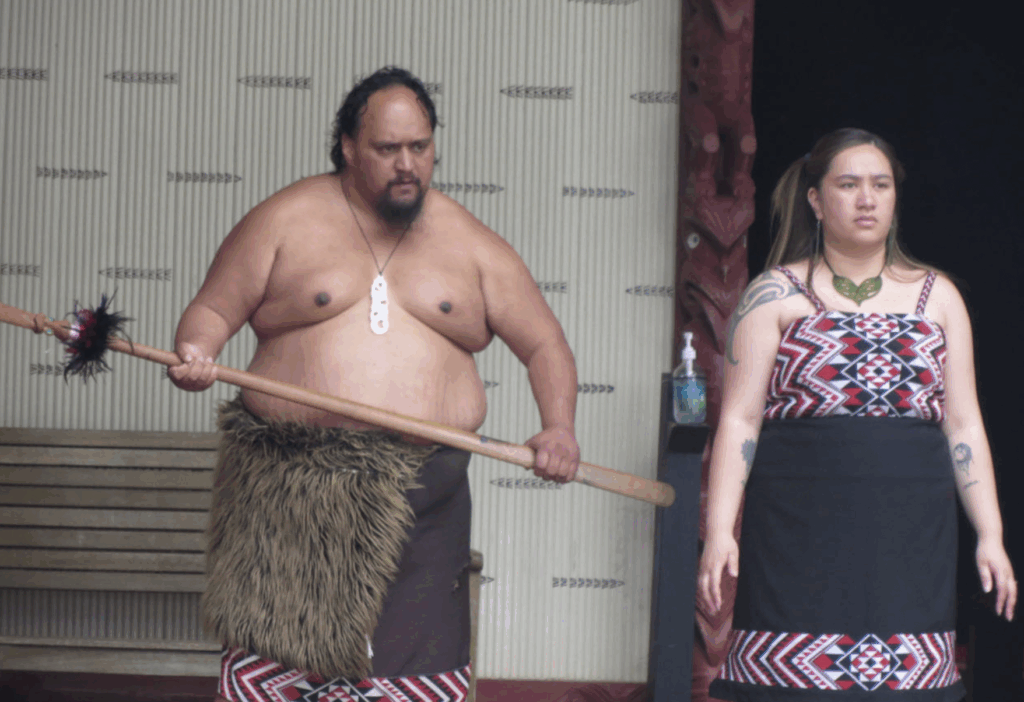
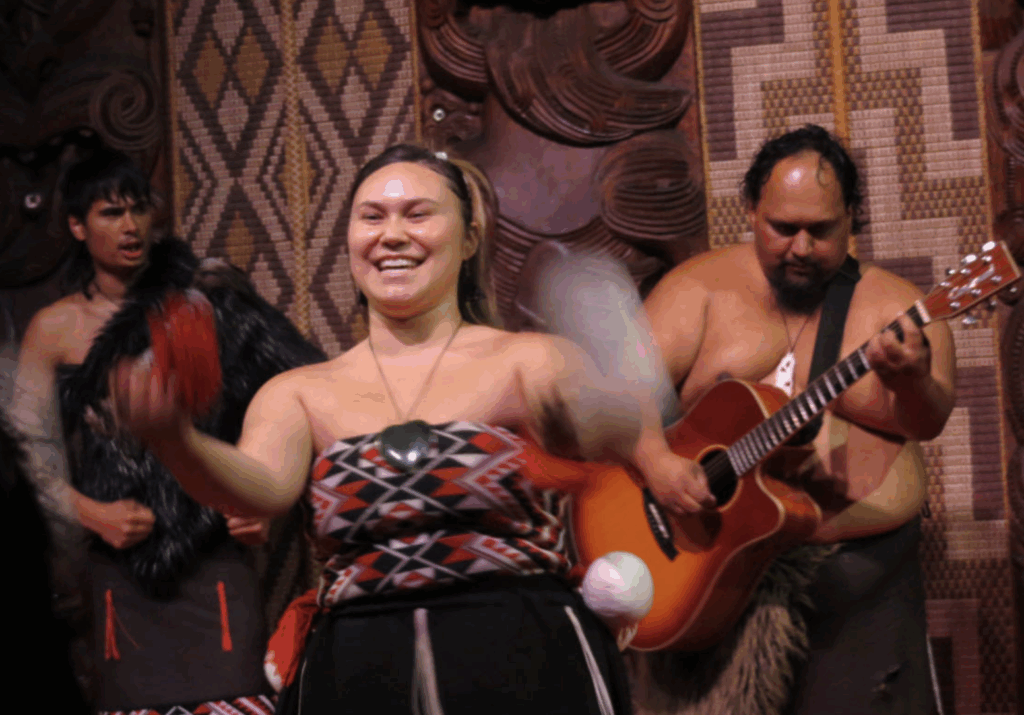
Mr. Busby’s house still stands. Across from it is a traditional Māori meeting house, where we could join a “cultural experience.” Tourists were asked to pick a chief. One brave soul volunteered. His job? Accept a peace offering from the Māori chief…
After the ceremonial speeches (improvised, in our case), we watched a performance filled with dances, games, songs, humor, and history.
Leave a Reply